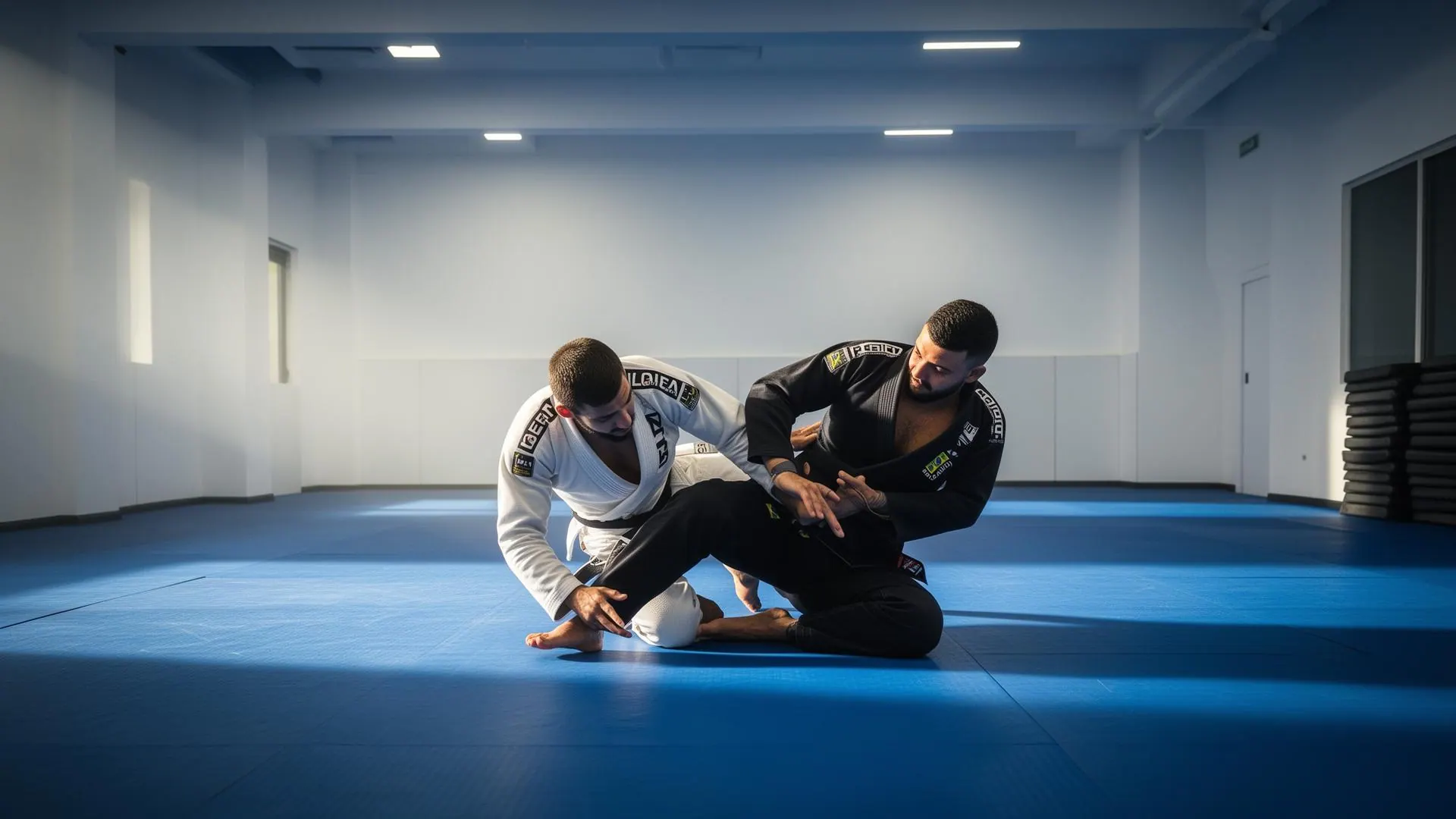
Safety Guide
How To Avoid Injuries As A Beginner In BJJ
Worried Jiu-Jitsu is too rough to start safely? Here's what actually causes most beginner injuries — and how to avoid nearly all of them.
"Isn't that dangerous?" is probably the question we hear most from people who've never stepped on a mat. It's a fair question — you're grappling with another human being, after all. But here's what people don't expect: the injuries that actually happen in BJJ almost never come from the technique itself. They come from ego, bad habits, and rushing things that need patience. Once you understand where the real risk is, avoiding it is mostly just a matter of discipline.
1. Tap Early, Tap Often
This is the single biggest factor in whether someone gets hurt training BJJ, and it has nothing to do with skill level. A joint lock or choke applied slowly gives you plenty of time to tap before anything gets damaged — the injury happens when someone waits too long, either out of pride or because they think they can escape a position they're already stuck in. New students especially feel pressure to "tough it out," but every experienced grappler on our mats has been tapped out hundreds of times. It's not a loss, it's how you learn. Tap the second something feels wrong, not when it starts to hurt.
- Tap to position, not just to pain — if you're stuck and can't escape, tap before it gets uncomfortable.
- There's no shame in tapping to a training partner who's been doing this for ten years.
- A good training partner will always ease off the moment you tap — if they don't, tell an instructor.
2. Warm Up Like You Mean It
Skipping the warmup because you walked in two minutes late is one of the most common ways people strain something in the first five minutes of class. Cold muscles and stiff joints don't move the way grappling asks them to. A proper warmup — some light cardio, hip mobility, neck and shoulder rolls — gets your body ready for the sudden, unusual positions Jiu-Jitsu puts you in. If you do show up late, take an extra minute or two to loosen up on your own before jumping into drilling or rolling.
3. Choose Training Partners Wisely (Especially Early On)
Not every roll needs to be a battle. When you're new, rolling with someone far more experienced is actually one of the safer options — they know how to control the pace and won't panic and muscle through a bad position. The riskier scenario is two beginners going hard against each other, both scrambling, neither one knowing how to control the intensity. A good academy pairs new students thoughtfully and teaches everyone — from day one — that "going 70%" with a partner who's smaller, newer, or recovering from something is a sign of respect, not weakness.
- Ask higher belts to go easier on you while you're learning — they expect the request.
- If a partner is going too hard, say something. A good gym wants to know.
- Save max-intensity rolling for when your body actually knows the movements.
4. Progress Gradually — Don't Skip Steps
Most soft-tissue injuries in grappling — tweaked knees, sore necks, strained shoulders — happen when someone tries to force a technique their body isn't ready for yet, usually because they saw it on Instagram and wanted to try it live. Jiu-Jitsu rewards patience. The students who train for years without major injuries are almost always the ones who built a base slowly: fundamentals first, live rolling second, advanced or flashy techniques only once the basics are automatic. There's no shortcut that skips this and doesn't eventually cost you something physically.
This is part of why the belt system exists in the first place — it's not just rank, it's a rough map of what your body is ready to handle. If you're still working out what those first months look like, our white belt survival guide walks through it in more detail.
5. Gear And Hygiene Matter More Than People Expect
A properly fitted gi, mouthguard, and — for some positions — knee pads reduce a surprising number of minor injuries and skin issues. Fingernails and toenails should be trimmed short; a scratch during a scramble is an easy, avoidable way to end up with a cut or infection. Mats should be cleaned regularly and you should shower right after training — skin infections like ringworm are one of the few genuinely preventable risks in this sport, and they're almost entirely a hygiene issue, not a "grappling is dirty" issue. A clean, well-run academy takes this seriously, and you should expect that from wherever you train.
The Short Version
| Risk Factor | How To Avoid It |
|---|---|
| Waiting too long to tap | Tap at the first sign of trouble, not when it hurts |
| Cold, unwarmed muscles | Never skip the warmup, even if you're late |
| Two beginners rolling too hard | Match intensity to experience level and ask for lighter rolls |
| Rushing advanced techniques | Build fundamentals first, add complexity gradually |
| Poor gear or hygiene | Trim nails, wear proper gear, shower and wash gear after every class |
None of this makes Jiu-Jitsu risk-free — no physical sport is. But most of what actually causes injuries on the mats is preventable, and a good academy builds a culture around exactly the habits above from your very first class. If you're still deciding whether to start, our guide on what to expect on your first class covers what that first step actually looks like.
Curious what a safe, well-run academy feels like?
Come see the mats for yourself. Book your free trial class today or call (949) 400-7108.
Frequently Asked Questions
Is BJJ safe for beginners?
Yes, when trained at a controlled academy with proper supervision. Most injuries come from ego or rushing, not from the techniques themselves — tapping early and training with experienced partners removes most of the risk.
What's the most common BJJ injury?
Minor soft-tissue strains — sore necks, tweaked fingers, strained shoulders — usually from forcing a technique too soon or not tapping in time. Serious injuries are far less common when students follow basic safety habits.
Should I be worried about getting choked?
A properly applied choke, tapped in time, causes no lasting harm — that's the entire design of the technique. The risk only comes from holding out too long instead of tapping.
Do I need special gear to avoid injury?
A well-fitted gi and trimmed nails cover the basics. Some students add a mouthguard or knee pads, especially once they're training more intensely or competing.
How do I know if a gym takes safety seriously?
Watch how instructors pair up new students, how quickly higher belts ease off when a beginner taps, and how clean the mats are. Those small details tell you a lot about the culture of an academy.